Hysteris

$175.00
Launching October 2026

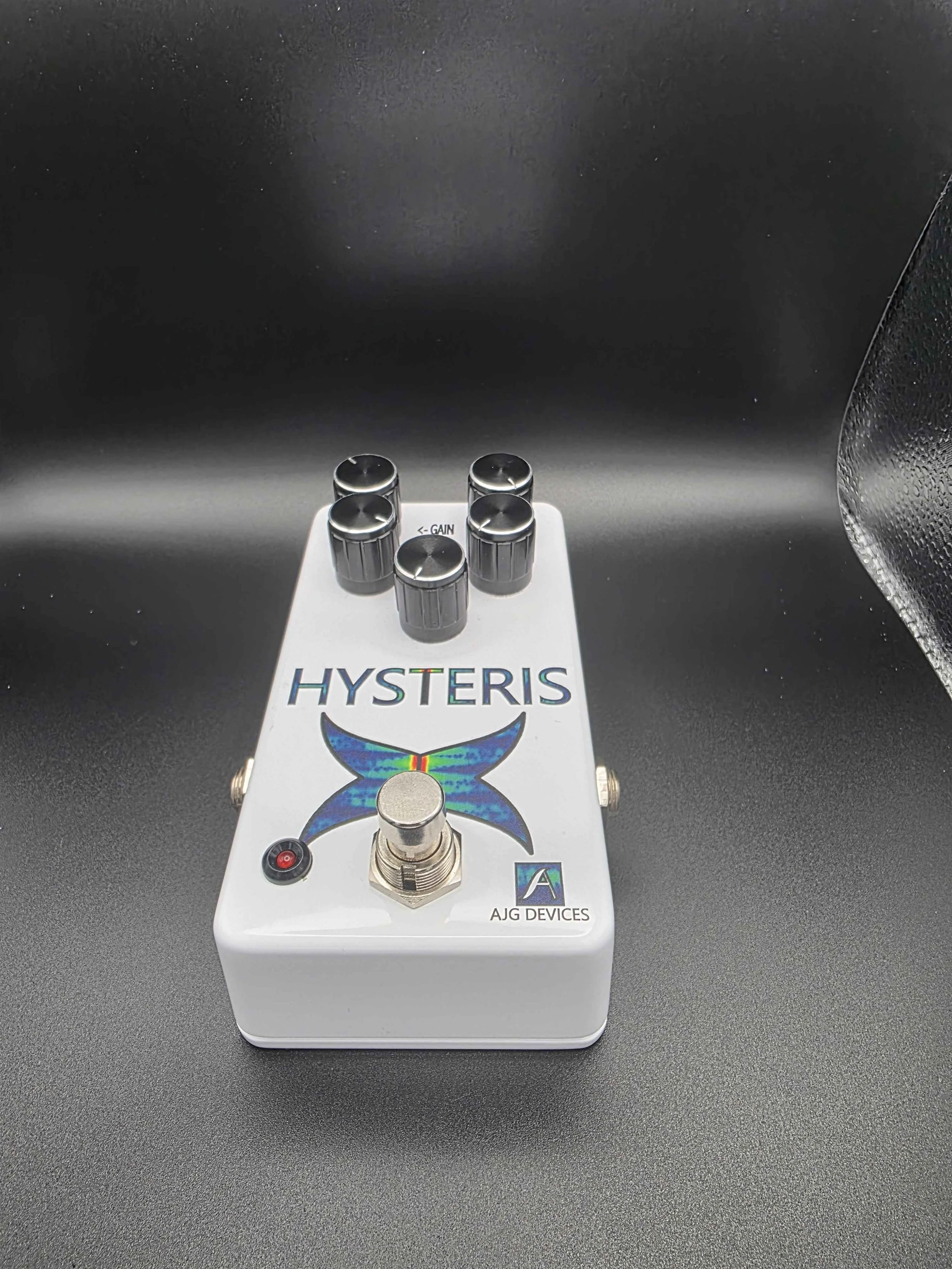
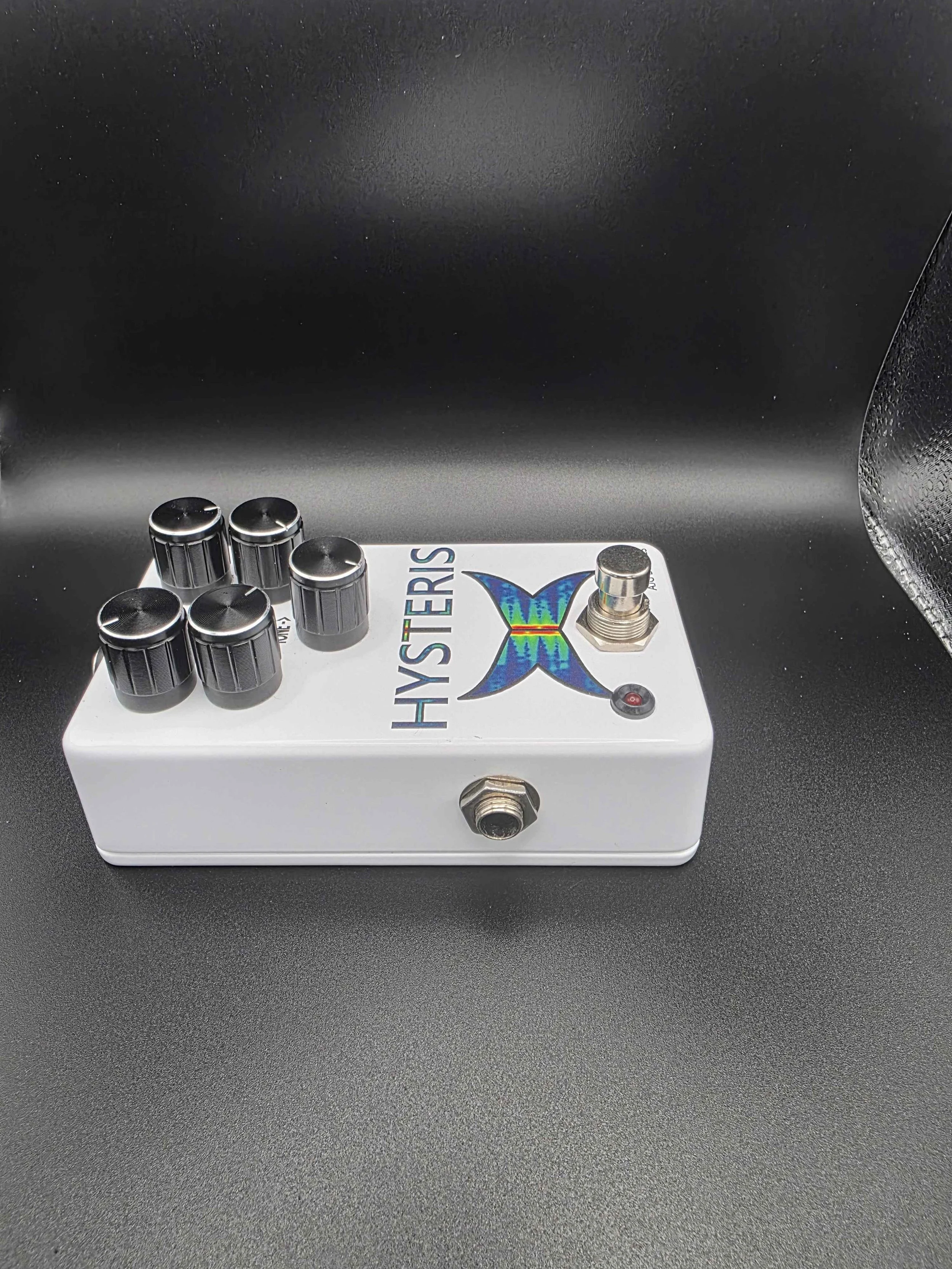
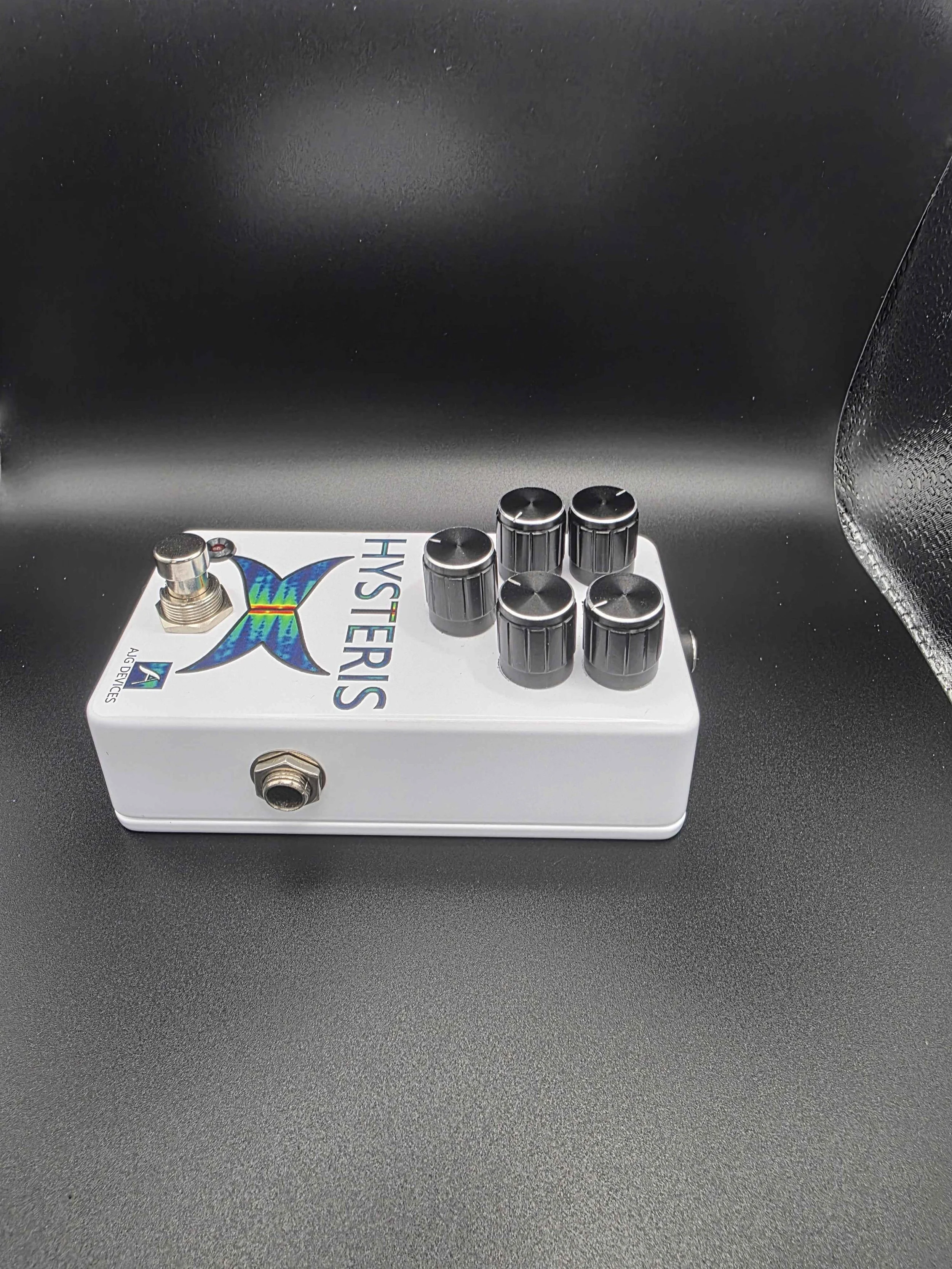
Hysteris is an overdrive/distortion pedal built around two distinct clipping mechanisms operating in parallel: op-amp saturation and hysteretic switching.

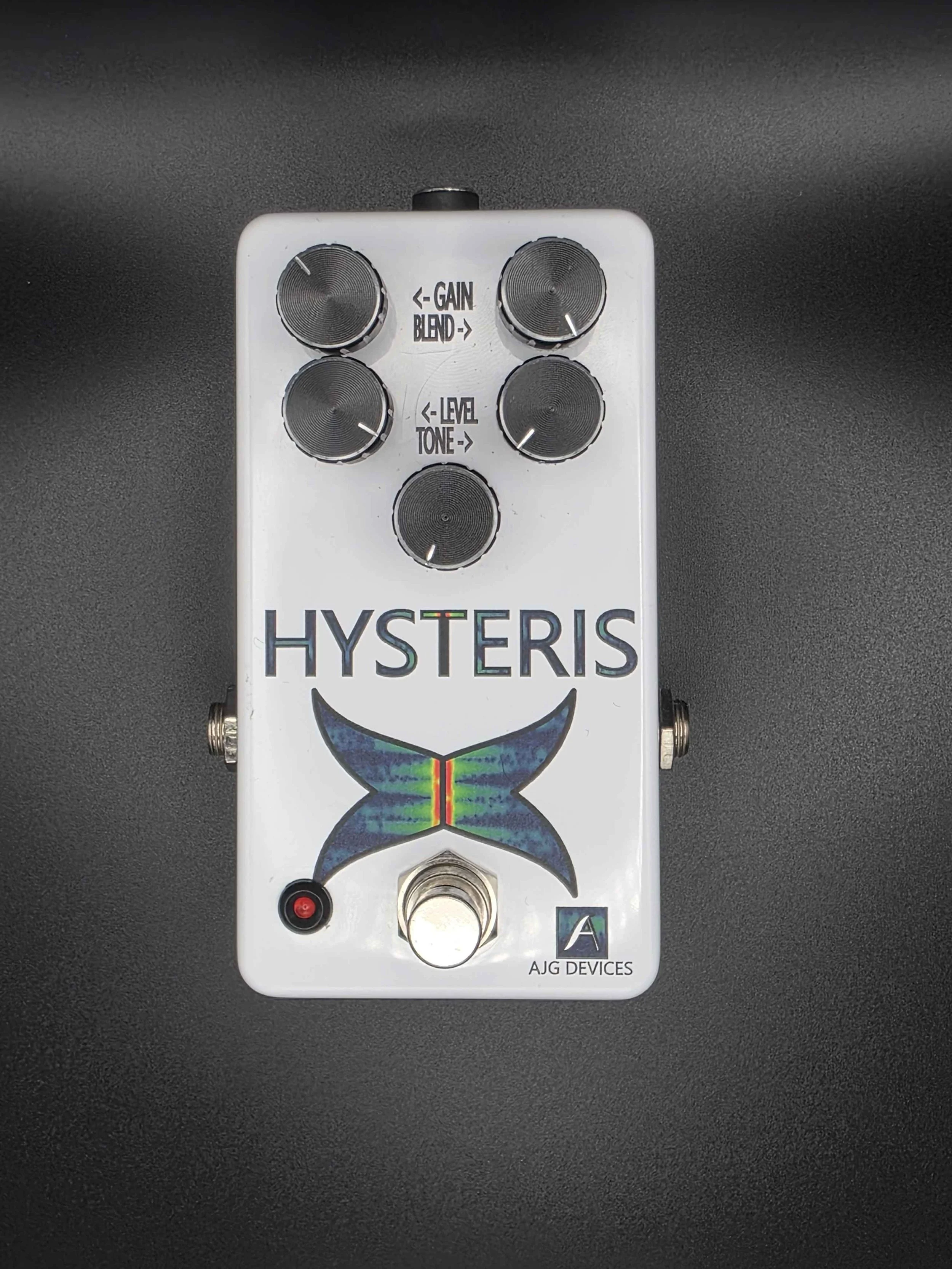
The Gain knob controls the gain of the op-amp saturation branch and how hard the rest of the circuit is driven. At lower settings, the signal remains relatively clean with minimal distortion. As the gain is turned up, it moves from overdrive into more aggressive distortion sounds.

The Hysteresis knob controls the stability of the less conventional hysteretic switching branch of the circuit. At lower settings it introduces a glitchy, gated character with rich harmonics. As you turn the knob up, the switching becomes more predictable leading to a cleaner, more conventional distortion sound.

The Blend knob allows control over how much of each topology contributes to the final output. As the knob is rotated clockwise the hysteretic switching path is mixed in with the op-amp saturation branch leading to a more fuzz-like tone.

The Tone and Level knobs control the high frequency content and overall output level respectively. The tone knob is configured as a low-pass filter, with the cutoff frequency decreasing as it is turned up. The level control operates conventionally, with clockwise rotation increasing the volume.

The branches of the circuit interact with each other to produce the unique sonic profile of Hysteris. The op-amp saturation stage feeds into the hysteretic switching branch, and then the outputs from each branch are blended together. At lower gain settings, this means you can have a relatively clean signal blended with one that has been heavily mangled by the switching branch. At higher gain settings, you can blend two harmonically distinct distortion profiles together to create textures that move between conventional distortion, rougher fuzz tones, and broken amplifier sounds.

Hysteris isn’t based on a traditional diode-clipping topology. It was built by experimenting with less conventional ways of generating distortion and using those results to create something you can actually play.

Get notified by email when this product is in stock.

Hysteris is an overdrive/distortion pedal built around two distinct clipping mechanisms operating in parallel: op-amp saturation and hysteretic switching.

The Gain knob controls the gain of the op-amp saturation branch and how hard the rest of the circuit is driven. At lower settings, the signal remains relatively clean with minimal distortion. As the gain is turned up, it moves from overdrive into more aggressive distortion sounds.

The Hysteresis knob controls the stability of the less conventional hysteretic switching branch of the circuit. At lower settings it introduces a glitchy, gated character with rich harmonics. As you turn the knob up, the switching becomes more predictable leading to a cleaner, more conventional distortion sound.

The Blend knob allows control over how much of each topology contributes to the final output. As the knob is rotated clockwise the hysteretic switching path is mixed in with the op-amp saturation branch leading to a more fuzz-like tone.

The Tone and Level knobs control the high frequency content and overall output level respectively. The tone knob is configured as a low-pass filter, with the cutoff frequency decreasing as it is turned up. The level control operates conventionally, with clockwise rotation increasing the volume.

The branches of the circuit interact with each other to produce the unique sonic profile of Hysteris. The op-amp saturation stage feeds into the hysteretic switching branch, and then the outputs from each branch are blended together. At lower gain settings, this means you can have a relatively clean signal blended with one that has been heavily mangled by the switching branch. At higher gain settings, you can blend two harmonically distinct distortion profiles together to create textures that move between conventional distortion, rougher fuzz tones, and broken amplifier sounds.

Hysteris isn’t based on a traditional diode-clipping topology. It was built by experimenting with less conventional ways of generating distortion and using those results to create something you can actually play.

Technical Specifications

9Vdc Center Negative

100 mA minimum supply capacity

No battery operation

1590B Enclosure

True Bypass

Behavior Guide

Hysteris is designed to operate well outside the behavior of a conventional distortion pedal. Some control combinations can produce gating, sputtering, abrupt changes in gain, unstable textures, or settings that seem to “break” the signal. This is intentional.

For a more conventional starting point, set all controls around noon and adjust Gain and Tone first.

As you lower the Hysteresis knob (Bottom Center), the circuit becomes less predictable. Depending on the Gain setting and your playing dynamics, this can shift the harmonic character, create gating effects, or cause the distortion to change significantly with pick attack.

If a setting sounds broken, try playing through it before turning the knobs back. It might be doing exactly what it was designed to do.

AUDIO SAMPLES

Demo 1 (All Controls at noon)
Demo 2 (Hysteresis low, Gain Mid, Blend 100%)
Demo 3 (Hysteresis Mid/Low, Gain Mid/High, Blend Mid)
Demo 4 (Hysteresis Mid/Low, Gain Mid/High, Blend 100%)
Demo 5 (Bypass)

BEhind the design